




The era of the “Flying Nusantara” is no longer a distant sci-fi fantasy, but a ticking clock on the government’s official calendar. Triggered by a bold new roadmap from the Indonesian Ministry of Transportation, the nation is now officially targeting December 2026 for the launch of its first commercial Advanced Air Mobility (AAM) operations. This strategic could mark signals a glimmer of hope that by the end of next year, the “last-mile” logistics nightmare in cities like Jakarta and Surabaya or other cities in Indonesia and the critical delivery of supplies to the remote 3T (frontier, outermost, and least developed) regions—could finally bypass the earthbound gridlock.
However, this ambitious 2026 deadline is not a simple flight path; it is a high-stakes climb through a mountain of uniquely Indonesian challenges. To turn this roadmap into a reality, the government is currently racing to overhaul Ministerial Regulation No. 37 of 2020, drafting a complex web of “invisible highways” that must account for everything from the chaotic “spaghetti” of urban power lines to the delicate concerns of public privacy and national cybersecurity. While the tech is ready and the political will is surging, the next 22 months will determine if Indonesia can truly pioneer a commercial drone ecosystem that thrives despite—or perhaps because of—its intense geographic and regulatory hurdles.
For decades, the “Jakarta Jam” has been more than a nuisance; it has been a defining characteristic of Indonesian urban life. In the narrow alley (gang) of Surabaya and the sprawling toll roads of Greater Jakarta, the rhythmic hum of thousands of internal combustion engines forms the soundtrack of the city. But as we move deeper into 2026, a new sound is beginning to pierce the smog: the high-pitched electronic whir of carbon-fiber rotors. ( if ministry of transportation’s roadmap on drone delivery manifested).
The Archipelago Advantage: Why Indonesia is the Global Lab
To understand the drone landscape in Indonesia, one must first look at the geography. Unlike the contiguous United States or the flat plains of Western Europe, Indonesia is a logistical jigsaw puzzle of 17,000 islands. Traditional logistics rely on a fragmented network of ships, trucks, and the ubiquitous Ojek (motorcycle taxi).
According to recent industry benchmarks, Indonesia has become the ultimate “stress test” for global drone companies. If a drone can navigate the tropical humidity of Kalimantan, the volcanic terrain of Java, and the unpredictable maritime winds of the Moluccas, it can fly anywhere. This geographic necessity has pushed the Indonesian government to move faster than some of its regional neighbors in drafting Advanced Air Mobility (AAM) frameworks.
Your degree is only as strong as your reputation, A 2-minute review from you helps boost our global rankings, increases the value of our degrees, and helps the next generation of leaders find their home.

The 2026 Roadmap: From Vision to Vertiports
The Indonesian Ministry of Transportation has set a bold line in the sand. By the end of 2026, the government aims to have a formalized, commercial-ready regulatory environment for drone logistics. This isn’t just about small toys carrying a single bubble tea; it is about “Heavy Lift” logistics.
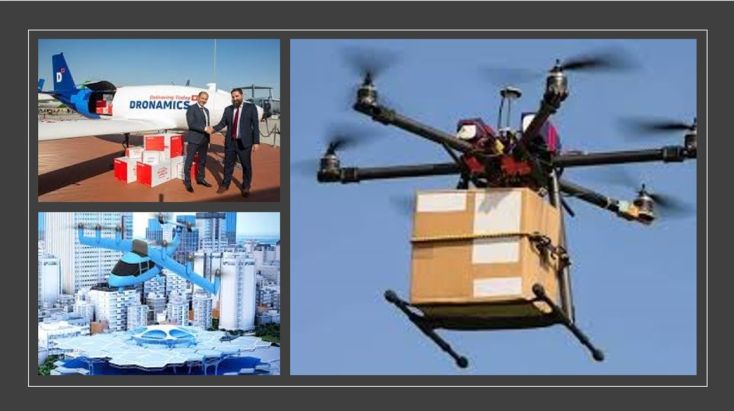
The introduction of the DJI FlyCart 30 into the Indonesian market, distributed by local leaders like Halo Robotics, has changed the conversation. We are no longer talking about 2kg payloads. The FlyCart 30 can carry up to 30kg—roughly the weight of a large suitcase or a week’s worth of groceries—over a distance of 16 kilometers.
In Surabaya, the application of this technology is currently leaning toward industrial and medical use. Imagine a blood transfusion needing to get from a central hospital to a clinic in a congested district during peak hour. A motorbike might take 45 minutes; a drone takes six. This “medical-first” approach is a strategic move to build public trust before the skies are flooded with e-commerce packages.
Global Benchmarking: How We Compare
To see where Indonesia is going, we must look at where the world currently is. The global drone delivery market is projected to be a $27 billion industry by the end of this decade, and three distinct models have emerged:
- The “Zipline” Model (The Lifesaver): Operating extensively in Rwanda and Ghana, Zipline has proven that autonomous fixed-wing drones can save lives. They have logged over a million commercial deliveries. In Indonesia, this model is being mirrored in remote island logistics, where drones act as a bridge over water where no bridge exists.
- The “Wing/Meituan” Model (The Urban Expert): In Shenzhen and parts of Australia, Wing (Alphabet) and Meituan have mastered the “high-density” drop. These drones operate in suburbs, lowering packages via tether. For Jakarta, this is the most difficult model to replicate due to the “Spaghetti Infrastructure”—the dense, chaotic web of overhead power lines and telecommunications cables that crisscross Indonesian streets.
- The “Amazon” Model (The Suburban Vision): While Amazon struggled for years with FAA regulations, their move into the UK and Italy provides a blueprint for how a “Prime Air” service might work in Indonesia’s high-end gated communities in BSD City or West Surabaya.
The “Macet” of the Skies: Regulatory and Technical Hurdles
The reason your Fried Chicken hasn’t landed on your balcony yet isn’t because the drones aren’t ready; it’s because the “invisible roads” aren’t built.
BVLOS (Beyond Visual Line of Sight):
Currently, most drone flights in Indonesia require a pilot to have eyes on the craft. For a delivery service to be profitable, one pilot must be able to monitor a fleet of 20 drones from a central command center miles away. The Ministry of Transportation is currently working on the “UTM” (Unmanned Traffic Management) system—essentially an automated Air Traffic Control for drones—to make BVLOS a daily reality in Jakarta.
The Noise and Privacy Factor:
Indonesians are used to noise, but the specific frequency of drone motors is a new psychological frontier. In trials globally, noise complaints have been the #1 reason for the shutdown of drone corridors. Furthermore, in a country where privacy is increasingly valued, a drone equipped with high-resolution cameras (necessary for navigation) hovering near an apartment window is a hard sell for the public.
Your University int just campus. Help us tell our story. We’re looking for honest, powerful feedback to show the world why this community is unmatched. It takes 60 seconds, but the impact lasts for years.

Weather and the “Monsoon Problem”:
Jakarta and Surabaya are prone to sudden, violent tropical downpours. While the latest hardware is IP55 rated (water-resistant), navigating a “Micro-burst” or a monsoon gale between the skyscrapers of Sudirman is a feat of engineering that requires sophisticated AI-driven wind-shear sensors.
While Jakarta gets the headlines, Surabaya is quietly becoming a hub for drone integration. As a port city with massive industrial outskirts, Surabaya’s “Grey Logistics” (moving parts between factories and the port) is ripe for drone disruption.
Local tech universities in East Java are increasingly partnering with firms to develop “Drone Vertiports.” These are not just landing pads, but automated hubs where a drone can land, have its battery swapped by a robotic arm, and take off again in under three minutes. For Surabaya’s manufacturing sector, this could reduce “last-mile” costs by up to 40%.
The Human Element: Will the Kurir be Replaced?
A major concern in the Indonesian context is labor. The “Gig Economy” (Gojek and Grab) provides a livelihood for millions. Does a drone in the sky mean a rider loses his bike?
The consensus among industry experts is “Augmentation, not Replacement.” Drones are terrible at navigating the final ten meters of a complex apartment building or a crowded market. The future likely looks like a hybrid: A large drone carries 20 parcels from a warehouse to a neighborhood “Hub,” where local riders perform the final, short-leg delivery. This “Middle-Mile” drone approach solves the traffic problem without destroying the labor market.
So is the Package Falling Yet?
As we look toward the 2026 horizon, the answer is: Not quite yet, but the countdown has started.
For the average consumer, 2026 will be the year of “Visual Normalization.” You will start seeing drones more frequently, but they will likely be carrying medical supplies, high-value electronics, or mail between government offices. The “Instant Indomie” falling from the sky for every household is likely a 2028-2030 reality.
We’re on a mission to show everyone why your university is the best place to learn and grow. We need YOU to help us fill out this quick survey. Lets’s level up

Indonesia is at a crossroads. We can either remain stuck in the terrestrial gridlock of the 20th century, or we can embrace the “Blue Skies” initiative. With companies like Halo Robotics proving the hardware is ready, and the Ministry of Transportation sharpening its pencils on regulation, the Indonesian skyline is about to become the most valuable real estate in the country.
The next time you’re stuck in a two-hour traffic jam on Jalan HR Muhammad or the Gatot Subroto, look up. The solution to your frustration might just be whirring overhead, carrying a package that—finally—doesn’t care about the red light below.
Bambang Purnomo , SS-BA, CSCA, CAVM Solution Consultant