





Your Voice is the Valedictorian! Drop a comment/review and help your university shine brighter. ✨
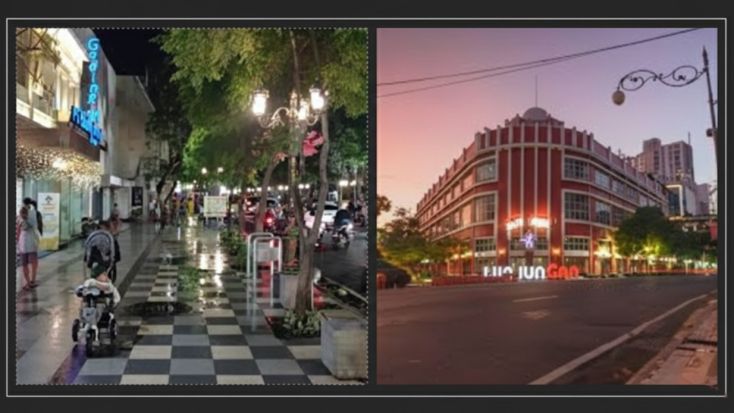
 Jalan Tunjungan, often lauded as the heartbeat of Surabaya, is far more than a mere thoroughfare; it is an epic poem etched into the city’s urban landscape. Spanning roughly 760 meters from the intersection of Embong Malang to the monumental Hotel Majapahit, this street serves as a powerful, tangible link between Indonesia’s colonial past, its revolutionary struggle, and its dynamic, modernized present. To understand Surabaya, one must walk Tunjungan, where every façade, every corner, and every historical echo contributes to a narrative of resilience, elegance, and enduring civic pride.
Tunjungan as a Heritage Corridor, the architectural ensemble of Jalan Tunjungan is perhaps its most compelling feature, reflecting the distinct phases of Surabaya’s development from a burgeoning port city into a major metropolis.
Back to the Colonial Zenith, In the late 19th and early 20th centuries, as the Dutch East Indies government expanded Surabaya’s administrative and commercial footprint, Tunjungan was conceptualized as a vital axis. It was designed to bridge the gap between the chaotic, densely packed commercial area near the Kalimas River (the Oude Stad or Old City) and the newly planned, spacious residential quarters (the Nieuwe Stad or New City) to the south, such as Darmo. This strategic positioning immediately elevated Tunjungan’s status.
Show some love to your university . It takes 3 minutes to impact the next 30 years.

The resulting architecture along the street is a masterclass in colonial-era design, primarily dominated by the Indische Empire Style and the subsequent Art Deco movement. The Indische Empire style, characterized by its classical symmetry, imposing columns, and large verandas adapted for the tropical climate, speaks to the early ambitions of the Dutch administration. Buildings from this period sought to project authority and permanence.
As the 1920s arrived, the influence of European modernism became apparent, leading to the proliferation of the Art Deco style. This movement introduced geometric ornamentation, streamlined forms, and a sense of dynamic modernity. Tunjungan became a showcase for this shift, featuring prominent structures that combined functional simplicity with sophisticated detailing. The street’s buildings were meticulously designed to host high-end commerce: department stores, exclusive boutiques, and elaborate restaurants. This fusion of styles is not merely aesthetic; it is a historical record of architectural evolution and global influence meeting local adaptation.
Several specific buildings on Tunjungan transcend their architectural merit to become historical texts in their own right:
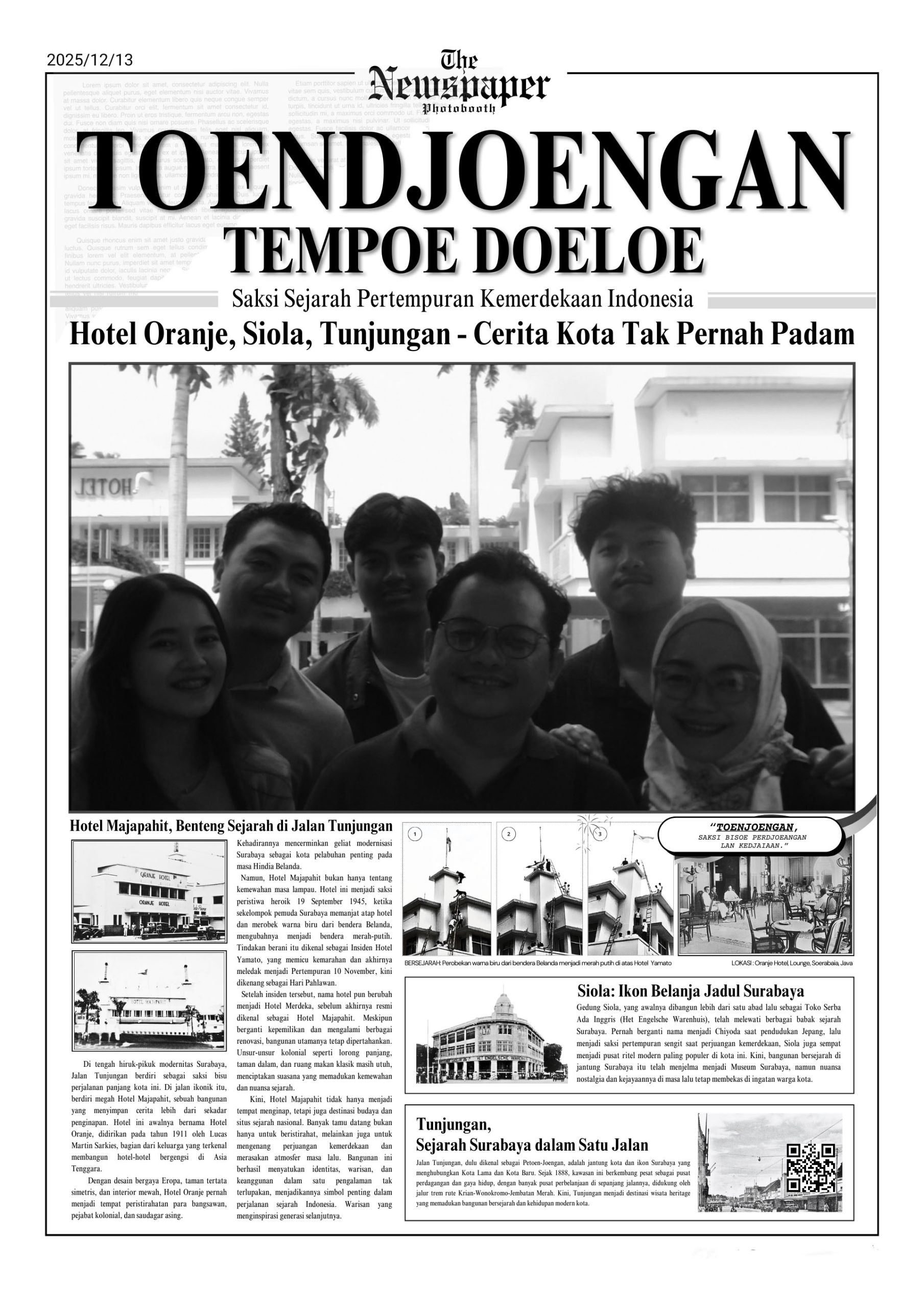
- Hotel Majapahit (formerly Hotel Yamato/Oranje): Undeniably the most historically significant structure on the street, this grand edifice stands as a silent sentinel of the nation’s birth. Initially built in 1910 and known as the Hotel Oranje, it embodied European luxury. Its later renaming to Hotel Yamato during the Japanese occupation was temporary, but its role in September 1945 was immortal. The building’s architecture—a magnificent example of Art Deco Classicism—adds to the drama of its history.
- Gedung Siola (formerly White Away Laidlaw): Located at the crucial northern end of Tunjungan, this building has worn many identities. Starting as the prominent British department store, White Away Laidlaw, it symbolized the street’s function as a commercial mecca. Post-independence, it evolved into Siola. Its architecture is characterized by large, functional windows and a layout designed for high-volume retail, contrasting slightly with the more ornate designs of the earlier period. Today, it not only serves as a commercial center but also houses the Surabaya Museum, ensuring that the street’s history is continually documented and presented.
- Former Restaurants and Cinemas: Scattered among the major landmarks are smaller, yet equally important, structures that once housed famous eateries like the ice cream parlor Hellendoorn and various cinemas. These venues cemented Tunjungan’s reputation as the epicenter of Surabaya’s social and leisure life, where residents went to see and be seen.
Did your University shape you? Return the favor!

Why Tunjungan is a Must-Visit
The argument for visiting Jalan Tunjungan rests on its ability to offer a multi-layered, immersive experience that transcends simple tourism.
- Immersive Historical Education: Unlike reading a history book, Tunjungan allows the visitor to physically inhabit the historical scene. Standing before Hotel Majapahit and contemplating the events of 1945 provides a visceral understanding of the sacrifices made for Indonesian freedom. The entire street serves as a powerful, free museum of the country’s social, commercial, and political evolution.
- Architectural Appreciation: For enthusiasts of urban design and architecture, Tunjungan offers a concentrated study of tropical adaptations of European architectural styles. The preservation efforts ensure that these beautiful, intricate facades can be studied and admired close-up, providing a stark contrast to the modern skyscrapers that dominate other parts of the city.
- Authentic Urban Vibe: Tunjungan is fundamentally a place of connection and convergence. It is where Surabaya’s youth gather, where families stroll, and where business deals are struck. Visitors get a genuine feel for the city’s energy—its characteristic directness, warmth, and modernity. The “Romansa” atmosphere, particularly in the evenings, offers a festive, safe, and engaging environment perfect for unwinding after a day of exploration.
- The Human Element: The ongoing story of Tunjungan is ultimately about the people—the merchants, the artists, the patriots, and the everyday residents. The street’s successful revival is a testament to the Surabayan community’s commitment to preserving its past while actively constructing a vibrant future.
Well lastly, Jalan Tunjungan is the definitive artery of Surabaya. It is a corridor of memory, a repository of architectural excellence, and a dynamic hub of contemporary life. It is not merely a street to be traveled on, but a destination to be experienced, inviting visitors to listen to the echoes of history, appreciate the beauty of its architecture, and partake in the relentless, forward-moving energy of the City of Heroes.
Come and Visit Jalan Tunjungan Surabaya
Bambang Purnomo , SS-BA, CSCA, CAVM Solution Consultant