





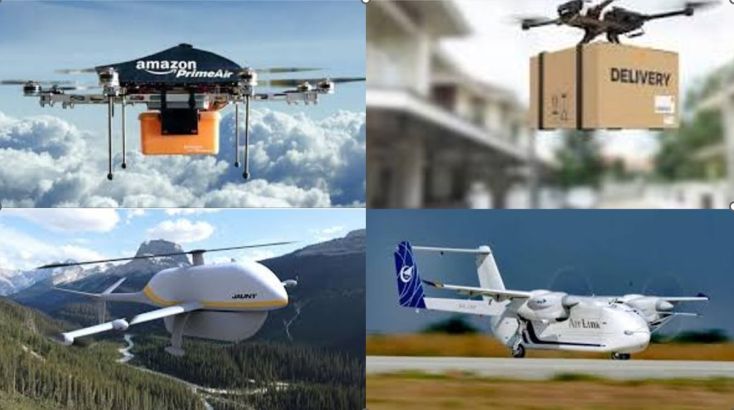
Imagine a world where small, buzzing aircraft deliver packages directly to doorsteps, rooftops, or remote drop zones within minutes or hours. That world is blooming now, not as a sci‑fi dream but as a real, evolving trend in logistics. Cargo drone delivery is moving from test flights to real‑world routes, and the implications stretch far beyond novelty. It could reshape speed-to-market, last‑mile costs, and service resilience in ways few people anticipated.
Please participate in short survey

This trend could potentially grow as advances in lightweight materials, battery density, autonomous navigation, sense‑and‑avoid systems, and hybrid-electric propulsion are bringing more capable drones online. As costs come down and reliability rises, fleets can handle more routes and payloads.
Regulation and safety evolution: Incremental regulatory pilots and approvals (airworthiness, geofencing, privacy, and urban air mobility frameworks) are reducing friction for commercial deployments. Coexistence with manned aircraft is improving as standards mature.
Demand is huge as urbanization, e‑commerce growth, and the need for rapid, last‑mile delivery push for faster fulfilment. In rural or disaster zones, drones offer a way to bypass congested roads or damaged infrastructure.
Drones can reduce ground handling, congestion, and human labor costs for last‑mile legs, especially in remote or high‑risk environments. They enable on-demand restocking for hospitals, retail, and manufacturing facilities.
Time‑sensitive shipments (medical supplies, laboratory samples, critical spare parts), drone‑to‑drone handoffs between hubs, and micro‑fulfilment in dense urban cores create scalable demand segments. Dozens of courier parcels can be consolidated at regional hubs and dispatched via fleets of drones, integrated with ground fleets and air cargo networks to create a layered, resilient delivery system.
Please participate in short survey

This capability could disrupt regular courier business models as Drone deliveries can lower last‑mile labor costs, reduce vehicle wear, and minimize traffic exposure. Although drone capex is high, unit costs can drop with scale, giving a competitive edge in certain routes.
If drones consistently deliver within minutes to hours in corridors where ground delivery is slower, incumbents must respond with speed-focused service tiers or risk churn.
Autonomous routing can provide predictable delivery windows, fewer human labor bottlenecks, and better performance in emergencies or weather‑manageable windows.
Zoning, parking, and access challenges in cities give drones a natural advantage for specific corridors (high‑rise buildings, gated communities, campuses, hospitals) where traditional couriers struggle or incur delays. Drone delivery shifts some risk away from drivers in heavy traffic. However, it introduces new safety, privacy, and airspace management obligations that incumbents must handle to avoid liabilities.
As drone networks scale, they enable multi‑modal, real‑time tracking and dynamic pricing. Competitors who harness such platforms can offer more granular SLA options, data visibility, and performance analytics.
If a major courier leverages drones to offer ultra‑fast delivery on a high‑volume subset of SKUs, other players may be forced to match or lose market share in that segment, pressuring margins across the board.
Please participate in short survey

In the airlines industry cargo drones as complementary to, not a replacement for, existing air and ground networks. Use drones for first/last‑mile, urgent shipments, or remote staging areas to accelerate overall transit times.
Build a modular, scalable fleet: Invest in a mix of drones with different payloads, endurance, and terrain capabilities. Pair smaller urban drones with larger, longer‑range units for regional service to hubs.
Create a hub-and-spoke underlay: Airlines can leverage their existing hulls, air navigation systems, and safety cultures to create a drone underlay that connects remote locations to traditional air cargo networks.
Collaborate with manufacturers (drones, sensors, batteries), software platforms (routing, autonomy, telematics), and regulatory bodies to de-risk deployment and share investments.
Establish rigorous pilot programs, airspace coordination, privacy policies, and insurance structures. Demonstrate superior safety records to win public trust and licenses.
Use advanced analytics for wind patterns, battery health, payload optimization, and predictive maintenance. Real-time visibility for customers becomes a competitive differentiator.
Build new pricing and service models: Offer time‑definite services, on‑demand spares, hospital or clinic restocking, or disaster relief logistics. Bundle drone legs with traditional freight to create end‑to‑end value propositions.
Invest in talent and reskilling: Train ops planners for multi‑modal networks, drone pilots (where required), and autonomy specialists. Create a culture that can adapt to rapidly evolving tech and regulation.
Risk management and contingency planning: Develop robust fault-tolerance, secure communications, cyber defense, and emergency response protocols for drone operations.
Customer experience and trust: Provide transparent tracking, parcel integrity checks, and clear SLAs for drone legs. Build a narrative of speed, reliability, and safety for customers and regulators.
For Courier companies there should be some initiatives to compete
Embrace hybrid networks: Integrate drones to handle urgent or hard-to-reach lanes while maintaining ground and air cargo networks for bulk transport and longer routes.
Specialize by sector: Target hospitals, pharmacies, e‑commerce fulfillment centers, and fragile goods where drone advantages are most pronounced.
Regional pilots and scale: Start with pilot programs in high‑density urban corridors or rural areas with limited ground infrastructure, then scale to additional locations.
Tech-first operations: Invest in route optimization, autonomous flight controls, packaging that protects from vibration and weather, and secure handoffs between drone and human couriers.
Collaborate with regulators: Lead in safety and privacy compliance, sharing data and insights to influence future rules that enable efficient drone‑enabled networks.
Customer education: Educate customers on delivery windows, handling requirements, and the benefits of drone involvement to reduce the friction of adoption.
Ethical and privacy considerations: Clearly communicate data collection practices, consent, and how footage or telemetry is used to build trust and avoid backlash.
Build resilience: Use redundancy, diverse routing, and on‑demand human oversight to maintain service during weather or tech outages (please also read relating to tech relating irregularity)
Courier companies that have adopted cargo drone delivery
UPS Flight Forward: A pioneer in the field, focusing on medical and time‑sensitive shipments with autonomous drones in controlled airspace, leveraging UPS’s established logistics network.
CVS Health partnerships: Utilized drone trials to deliver medical items, exemplifying healthcare-focused drone use cases within a courier ecosystem.
Zipline (medical logistics specialist): While not a traditional courier company, Zipline’s drone network for medical supplies demonstrates the viability of drone logistics in critical supply chains and informs broader courier strategies.
JD.com and other e‑commerce players: In some markets, major e‑commerce operators have piloted drone deliveries to improve last‑mile speed in rural or congested areas, often in collaboration with local carriers or logistics arms.
DHL and local city pilots: Various pilots with DHL in different regions have explored parcel deliveries via drones, focusing on urban and peri‑urban corridors and disaster relief scenarios.
So, is cargo drone delivery the future of shipping? It’s shaping up to be a powerful complement to existing networks, not a blanket replacement. The trend could grow where it makes sense—urgent, high‑value, or hard‑to‑reach deliveries—creating new service tiers, new partnerships, and new sources of efficiency. For airlines and couriers, the winning play is to blend drone capabilities with traditional strengths: safety, scale, customer trust, and global reach. Build modular fleets, partner smartly, navigate regulation with proactivity, and keep the customer experience at the center. If you do that, drone delivery won’t just disrupt it will redefine how we think about speed, service, and resilience in logistics.
Salam Sehat Semangat Sukses
Bambang Purnomo , SS-BA, CSCA, CAVM Solution Consultant